The DollarAngle
Financial compatibility is less about earning the same salary and more about telling the truth, choosing fair systems, and revisiting the plan when life changes.
The first time a couple discusses money, it often begins with something harmless.
“Are we really spending that much on takeout?”
“Wait. Are you counting the coffees you buy on the way to work?”
And suddenly the conversation is no longer about takeout or coffee. It is about who feels judged, who feels responsible, and who gets to decide what is reasonable.
It is tempting to avoid the subject. You love each other. You are building something together. Why spoil a good evening with a conversation about credit cards?
Because love is a relationship. A financial plan is a set of decisions. One cannot quietly substitute for the other.
The FDIC encourages couples who are marrying or moving in together to talk about how they will handle accounts, budgets, credit, debt, and shared expenses. The Consumer Financial Protection Bureau also emphasizes that financial choices reflect individual history, relationships, and goals.
You do not need a joint bank account to begin building financial trust. You need honest conversations, clear expectations, and a little patience.

Every couple brings two financial histories into one relationship. Understanding those histories is a better starting point than assuming you think alike.
1. What did money feel like when you were growing up?
Some people grew up where the bills were discussed openly. Others remember arguments behind closed doors. One person might associate a full savings account with safety. Another might associate spending on experiences with love.
A partner who is extremely cautious may not be trying to control the household. A partner who enjoys spending may not be irresponsible. Those habits can come from very different experiences.
Try asking:
- “What did your family teach you about saving?”
- “What purchase makes you feel guilty, even if you can afford it?”
- “What does being financially secure actually mean to you?”
A realistic conversation
“Why do you always get nervous when I book a vacation?”
“Because growing up, a surprise bill could put us behind for months. I need to know we’re covered first.”
“I didn’t know that. What would make the trip feel affordable to you?”
That last question moves the conversation from blame to a decision.
2. What do we actually earn, spend, and have left?
You do not need to exchange every account statement on your third date. Financial disclosure should grow with commitment and shared obligations.
But before signing a lease, buying property, or committing to a long-term shared budget, vague answers are not enough.
Talk about take-home pay, fluctuating income, major recurring expenses, dependents, and savings. If someone is self-employed or works irregular shifts, agree on a conservative income number for essential bills.
Ask yourselves whether your lifestyle works on the income you reliably earn, not merely on your best month.
A realistic conversation
“I assumed your bonus covered the vacation.”
“I only receive it if the team hits its target.”
“Then maybe the vacation budget should come from what we can save every month, not a bonus we haven’t earned.”
Write down a shared monthly snapshot: income, essential expenses, financial obligations, savings, and flexible spending.
3. What debt are we bringing into the relationship?
Debt is not a moral verdict. Student loans, credit cards, car financing, medical bills, and family obligations have different stories and different costs.
But secrecy about debts that affect a shared financial decision can become a serious problem.
Talk about approximate balances, required payments, interest rates, whether payments are current, and whether either person is guaranteeing or co-signing another person’s debt.
You do not have to take responsibility for a partner’s existing debt simply because you are dating. And getting married does not automatically make every pre-marriage debt jointly owed. Rules can vary by state and by the kind of agreement or account involved.
A realistic conversation
“You said you had some credit card debt. How much is ‘some’?”
“$8,000.”
“Okay. I wish I’d known sooner. What is the interest rate, and what’s your repayment plan?”
Notice the difference between asking for clarity and delivering a character judgment.
For help prioritizing repayment, explore DollarAngle’s financial order of operations.
4. What does a fair split of shared expenses look like?
Two partners earning different amounts may have completely different ideas of fairness.
Imagine one partner brings home $6,000 a month and the other brings home $3,000. Their shared rent, utilities, and groceries total $2,400.
A 50/50 split means each pays $1,200. That represents 20% of the higher earner’s income and 40% of the lower earner’s income.
A proportional split means the higher earner pays $1,600 and the lower earner pays $800, about 26.7% of each person’s income.
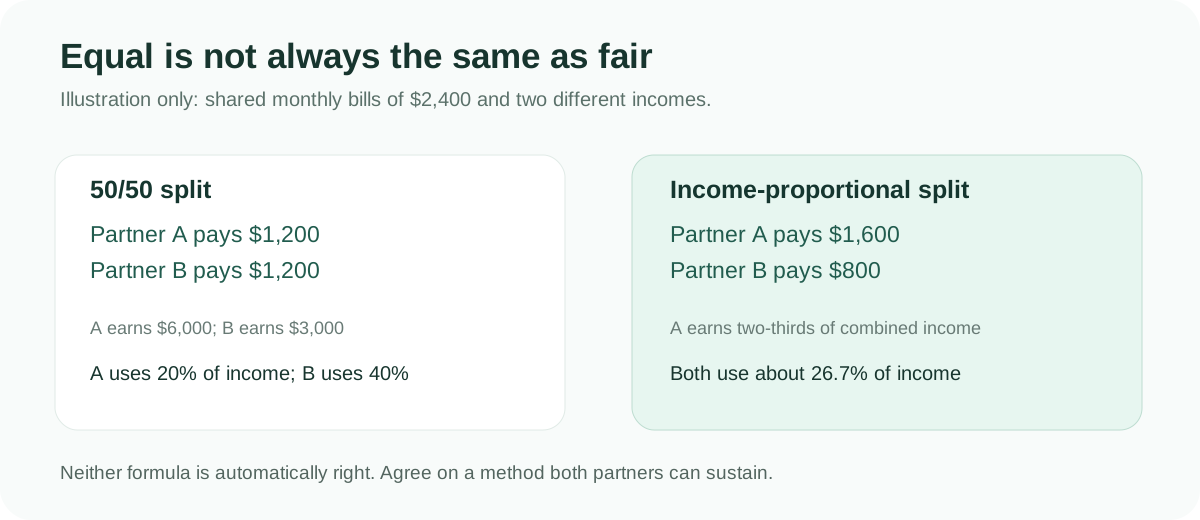
Illustrative numbers only. Actual fairness can also depend on childcare, caregiving, health costs, existing obligations, and shared choices.
There is no universal rule. Some couples prefer equal contributions, some use income percentages, and some agree on an arrangement based on what each can comfortably afford.
A realistic conversation
“I want everything to be 50/50.”
“I understand. But that leaves me with almost nothing after rent.”
“Then let’s calculate what each arrangement actually leaves us with.”
The goal is not to win an argument about fairness. It is to agree on a sustainable method before resentment builds.
5. What happens when life goes wrong?
A couple can look financially comfortable while being one missed paycheck away from a crisis.
Discuss emergency savings, unstable income, medical deductibles, insurance coverage, and what happens if either person loses a job.
Try a few uncomfortable scenarios:
- What if one partner cannot work for three months?
- What if the car needs an expensive repair?
- What if a parent needs financial support?
- What if we separate while sharing a lease?
If you share financial obligations, decide how much of an emergency cushion you want and where you will keep it. Maintain enough personal access to money for everyday independence and unexpected circumstances.
Read our guide to building an emergency fund without putting life on hold.
6. What are we building together, and what are we willing to trade off?
One partner dreams of buying a home. The other wants the freedom to change jobs, travel, or start a business. Neither dream is automatically more responsible.
The expensive mistake is assuming that both of you have silently agreed on the same future.
List your next one-year, three-year, and ten-year goals. Then attach rough price tags.
Questions worth asking:
- Do we want children, and how might childcare affect our income?
- Are we planning to rent, buy, or relocate?
- Would we support one partner returning to school or changing careers?
- How much retirement saving do we want to protect?
- How much fun spending do we want to keep while saving?
Do not pretend every aspiration fits inside the current budget. Rank them and decide what comes first.
7. What stays personal, and how do we talk about money again?
A joint account can be useful, but it is not proof of commitment. Separate accounts can preserve autonomy, but they should not become a convenient way to avoid responsibility.
Some couples use one account for shared bills and maintain separate accounts for personal spending. Others prefer fully joint finances. Either can work when both partners understand the arrangement.
Agree on a few ground rules:
- Which expenses require a conversation before purchase?
- What amount can each person spend freely?
- Who pays which bills, and how will both stay informed?
- What financial information should never be hidden?
- When will we check the plan together?
One more thing: financial privacy and financial secrecy are not identical. Healthy partners can maintain individual discretion without hiding material obligations. No one should have to surrender access to basic resources to prove trust.
A short monthly check-in works better than waiting for the next argument.
A realistic conversation
“Can we talk about the credit card?”
“Is this going to be another lecture?”
“No. Twenty minutes. Let’s look at the bill, see what changed, and pick one thing to do before next month.”
One practical way to start: a 30-minute money date
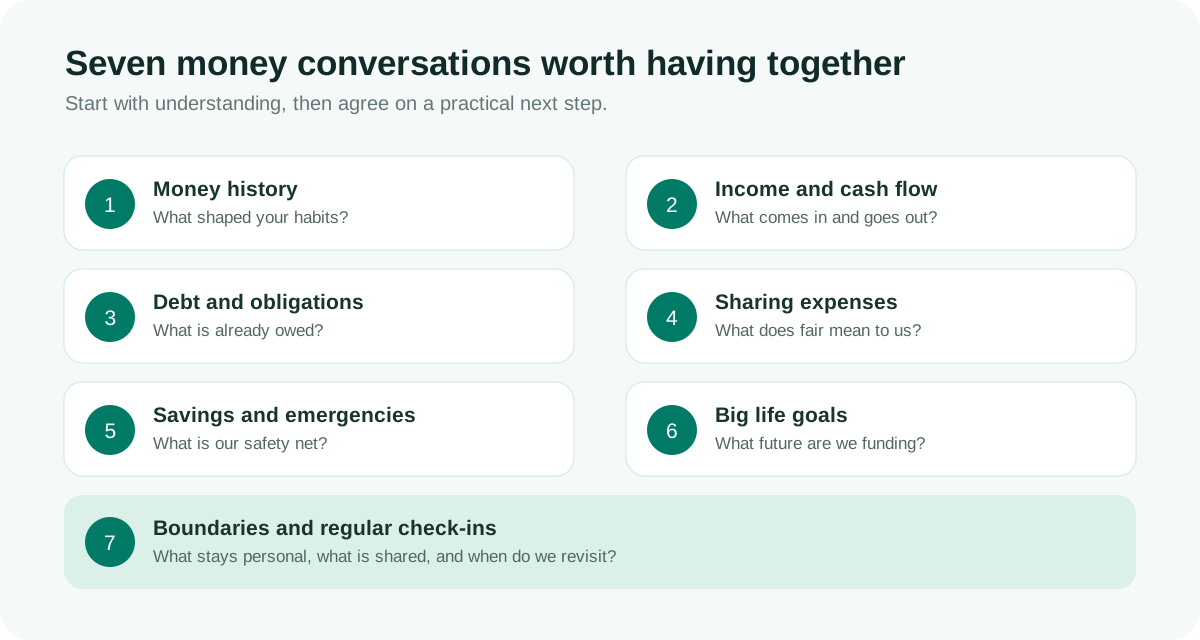
You do not need to finish all seven topics in one evening.
For the first 30 minutes, try this:
First 10 minutes: Each person explains one money worry and one financial hope, without interruption.
Next 10 minutes: Look at a single concrete issue, such as shared bills or the emergency fund.
Final 10 minutes: Agree on one action, one owner, and a date to check the result.
A helpful opening line is: “I want us to feel like a team when it comes to money. Can we work through this together?”
If a conversation becomes hostile, controlling, or unsafe, prioritizing personal safety and independent support matters more than finishing a budget discussion.
Dating, living together, married: the right level of disclosure changes
If you’re dating: Start with attitudes, spending expectations, debt philosophies, and life goals. You generally do not need full access to one another’s accounts.
If you’re moving in together: Discuss exact contributions, leases, deposits, bills, ownership of purchases, and an exit plan before signing.
If you’re married or planning a family: Discuss a complete household picture, beneficiary choices, insurance, retirement goals, childcare, estate planning, and decision-making responsibilities. State law and legal arrangements can affect your rights and obligations.
Money conversations should deepen as financial decisions become more intertwined.
The DollarAngle
You do not need matching salaries, identical spending personalities, or a single joint bank account to build financial stability together.
You need to be able to tell the truth without fear, understand the tradeoffs, and make decisions that both people can live with.
A financially strong couple is not necessarily a couple that never argues about money.
It is a couple that knows how to turn the argument into a plan.
Sources and further reading
- FDIC: Saying “I Do” to Sharing Finances
- CFPB: Money Motivations
- CFPB: Your Money, Your Goals Toolkit
- CFP Board: How to Manage Your Relationship and Your Money
- CFP Board: To Have and to Hold, Couples Navigating Money and Commitment
DollarAngle provides financial education for informational purposes, not individualized legal, tax, or investment advice. Legal rights and financial obligations may differ by state and personal circumstances.