The DollarAngle
The first goal is not a perfect savings number. It is enough cash to stop a normal surprise from becoming expensive debt.
An emergency fund is not exciting. It does not have a ticker symbol, a dramatic chart or a promise of life-changing returns.
That is exactly why it matters.
Emergency savings protect the rest of your financial plan when normal life becomes expensive: a car repair, urgent travel, medical bill, broken appliance or temporary loss of income.
The Consumer Financial Protection Bureau describes an emergency fund as a cash reserve set aside for unplanned expenses or financial emergencies. It also notes that even a small amount can provide some financial security.
The mistake is treating emergency savings as an all-or-nothing goal.
You do not need to wake up with six months of expenses in cash. You need to build financial breathing room in layers.

An emergency fund gives you more time and better options when an unplanned bill arrives.
Start with a first-line buffer
People often hear rules such as “three to six months of expenses” and conclude that an emergency fund is impossible.
Do not let the final target prevent the first deposit.
A more useful first milestone is enough cash to cover the type of surprise that would otherwise go straight onto a credit card.
For one household that might mean the cost of a common car repair. For another it might mean an insurance deductible, urgent travel or a larger home repair.
The exact number is personal.
The important question is:
What is the most likely financial surprise that could knock my monthly budget off course?
Your starter buffer should be large enough to make at least one of those events less destructive.
That is a more useful starting point than chasing a generic number because someone on the internet told you to.
Think in layers, not one magic number
Once the first-line buffer exists, build the reserve in stages.
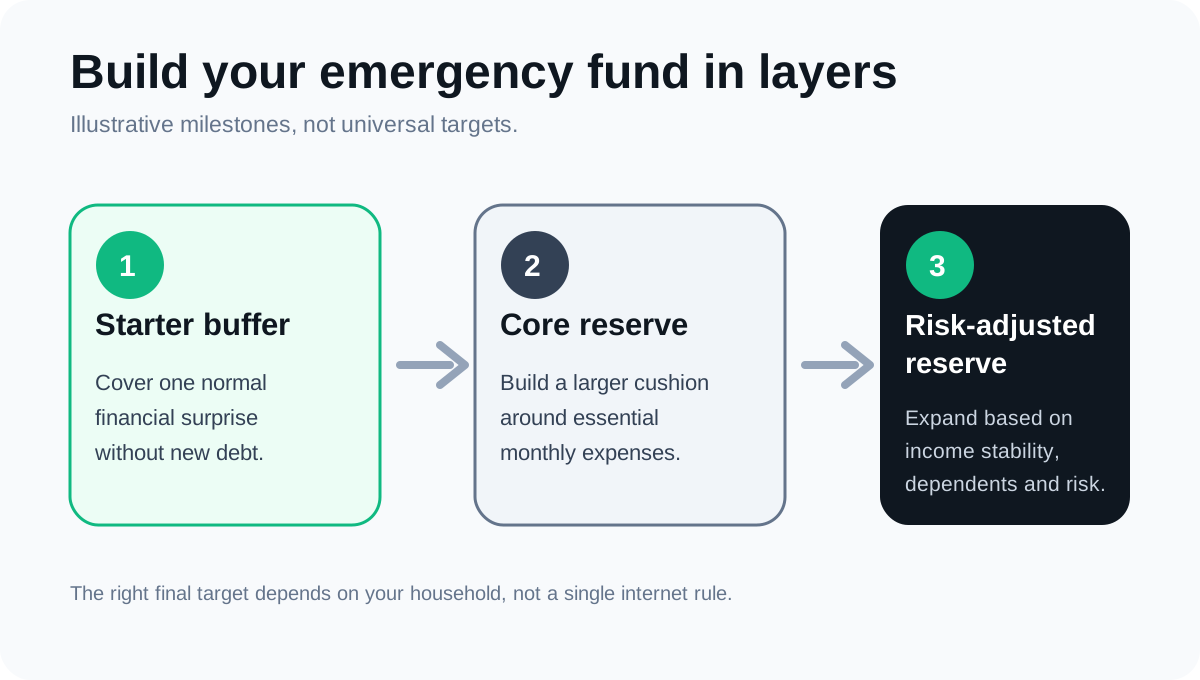
Illustrative milestones, not universal targets. Your final reserve should reflect your own household risks.
Stage 1: Starter buffer
Cover one normal financial surprise without immediately creating new high-interest debt.
This is the “something went wrong, but I can handle it” layer.
Stage 2: Core reserve
Build toward a larger cushion measured against essential expenses, not every dollar of lifestyle spending.
A useful intermediate milestone can be around one month of essentials, especially if you are starting from zero.
This is not a universal rule. It is simply a practical checkpoint between “almost no cash” and a much larger reserve.
Stage 3: Risk-adjusted reserve
Continue building based on the risks your household actually faces.
Someone with irregular self-employment income, one household income, high insurance deductibles and dependents may reasonably want more cash than someone with two stable incomes, strong benefits and low fixed expenses.
Your target should reflect factors such as:
- job stability,
- whether the household has one income or several,
- variable or commission-based pay,
- health and insurance deductibles,
- dependents,
- home or car repair exposure,
- access to other liquid assets,
- and how quickly you could cut spending after an income loss.
This approach is more flexible than treating one number as financially correct for everyone.
Separate emergencies from predictable irregular expenses
Not every large bill is an emergency.
Car maintenance, annual insurance premiums, holiday spending, school expenses and routine home repairs may be irregular, but they are predictable over time.
Those expenses belong in sinking funds.
A sinking fund is simply money saved gradually for a known future category.
For example, if you know you will eventually need tires, home maintenance or an annual insurance payment, build those costs into separate savings buckets.
This protects your emergency reserve from being drained by expenses that were never really emergencies.
It also gives your cash clearer jobs:
- emergency fund for true financial shocks,
- sinking funds for irregular but expected expenses,
- investment accounts for long-term wealth building.
The cleaner those categories are, the easier it becomes to know whether you are actually financially prepared.
Where should the money live?
Emergency money has three main jobs:
- stay accessible,
- preserve value reasonably well over the short term,
- avoid market risk that could force a loss when the money is needed.
For many U.S. households, a dedicated savings account at an insured bank or federally insured credit union can fit those requirements.
FDIC insurance covers eligible deposit accounts at FDIC-insured banks, including savings accounts. NCUA share insurance provides similar protection for eligible accounts at federally insured credit unions.
The exact account matters less than the function.
You want the money:
- easy enough to access during a genuine emergency,
- separate enough that you are not constantly spending it,
- and protected from the short-term volatility that comes with assets such as stocks or crypto.
An emergency fund does not need to maximize return.
It needs to be there when the rest of your plan is under pressure.
Automation beats motivation
Saving whatever happens to remain at the end of the month often produces nothing.
A better system is to make savings happen automatically.
The CFPB specifically points to recurring transfers as one practical way to create consistent savings.
That could mean moving a fixed amount from checking to savings shortly after every payday.
The amount does not need to be impressive.
Consistency is more important at the beginning.
You can also use irregular cash inflows to speed things up:
- tax refunds,
- bonuses,
- gifts,
- overtime,
- side-income spikes,
- cash from selling unused items.
If saving $400 every month would make your current life unsustainable, do not build a plan around $400.
Maybe the automatic amount is $40, $75 or $150 while you improve cash flow.
A system you can sustain is better than an aggressive target you abandon after six weeks.
Keep living while you build it
Emergency-fund advice can become unnecessarily miserable.
If the only way your plan works is by removing every restaurant meal, hobby, trip and enjoyable purchase for years, there is a good chance the plan will not last.
That does not mean spending without limits.
It means setting priorities.
One useful approach is to divide surplus cash between the emergency fund and a small amount of planned discretionary spending.
You can still go out occasionally, travel within reason or spend money on something you value while building financial resilience.
The objective is not punishment.
It is creating a stronger balance sheet without turning the process into a temporary crash diet.
What if you also have credit-card debt?
This is where all-or-nothing rules break down.
If you direct every spare dollar toward debt while keeping zero savings, the next car repair may go straight back onto the card.
That can create a frustrating loop:
- pay the card down,
- experience an unexpected expense,
- put the expense back on the card,
- start again.
A small emergency buffer can reduce that cycle.
Once that buffer exists, more cash flow can often be directed toward expensive debt while the emergency fund grows more slowly.
The exact balance depends on:
- the debt’s interest rate,
- income stability,
- minimum payments,
- available employer benefits,
- and the risks your household faces.
A 25% credit-card balance creates a very different tradeoff from a low-rate fixed loan.
The goal is not to follow a slogan. It is to prevent the next emergency from undoing your debt progress.
When should you use the fund?
A simple test is whether the expense is:
- necessary,
- unplanned,
- and financially disruptive if not addressed.
A broken furnace in winter can qualify.
An urgent medical expense can qualify.
A sudden loss of income can qualify.
A discounted vacation usually does not.
It is also important not to become afraid of using the fund.
If a real emergency happens and you use the money, the fund did not fail.
It worked.
Rebuilding it simply becomes the next savings priority.
Avoid the “too much cash” problem
Emergency savings can become excessive if fear keeps every additional dollar in cash indefinitely.
Cash provides stability, but it also has an opportunity cost.
Once you have a reserve that is appropriate for your risks, additional long-term money may have better jobs:
- retirement accounts,
- diversified investments,
- debt reduction,
- education,
- a home purchase,
- or another long-term goal.
The purpose of the emergency fund is resilience.
It should make the rest of your financial plan easier to follow, not prevent you from moving forward forever.
The DollarAngle
Emergency savings are financial breathing room.
Build the first layer fast enough to stop a normal surprise from becoming expensive debt.
Then build a larger reserve around your household’s actual risks, not a number chosen because it sounds authoritative online.
Keep predictable irregular expenses in separate sinking funds.
Automate what you can.
And once the reserve is strong enough for your situation, let the rest of your money get back to building your future.
The return on an emergency fund is partly invisible: fewer forced decisions, fewer desperate loans and more time to think when life gets expensive.
Sources and further reading
- CFPB: An essential guide to building an emergency fund
- CFPB: Evidence-based strategies to build emergency savings
- FDIC: Deposit Insurance at a Glance
- NCUA: Share Insurance Coverage
DollarAngle provides financial education and commentary for informational purposes only. It is not personalized financial, investment, tax or legal advice. The appropriate emergency reserve depends on individual circumstances.