The DollarAngle
A person's salary or taste in restaurants tells you less than their honesty, reliability, respect for boundaries and willingness to talk about money.
You have been seeing someone for six weeks. The dates have been fun. They know the best restaurants, order without checking the prices, and seem completely relaxed about money.
Then the check arrives.
“Could you grab this one? My card is acting up again.”
You pay. It is no big deal.
But the next week, there is another card problem. Then a rent emergency. Then a joking comment about how a good partner would never hesitate to help.
Is that a run of bad luck, a mismatch in expectations, or a financial red flag?
The answer is rarely visible in one dinner bill. What matters is the pattern, the honesty behind it, and how someone responds when you say no.
A person can earn a high salary and be financially unreliable. They can earn very little and be an excellent partner in building long-term security. And having debt does not automatically make someone a bad date.
Here are eight behaviors worth noticing, without turning dating into a credit-score interview.

The dinner bill is less revealing than the conversation about it.
1. They spend big to impress you, then panic about basic bills
Fancy dates are not inherently irresponsible. Some people enjoy restaurants, experiences or treating a partner. The question is whether the spending fits their actual financial situation.
Imagine this exchange:
“We should go to that rooftop place again.”
“I thought you said you were worried about rent this month?”
“I’ll figure rent out later. You only live once.”
A night out is not the problem. Repeatedly sacrificing rent, debt payments or essentials for appearances is.
Healthy sign: They can enjoy themselves and still say, “That place is outside my budget this week. Let’s do something else.”
Ask: “What does a comfortable date-night budget look like for you?”
2. Every bill becomes your responsibility, without a real discussion
There is no universal rule that says every first date must be split 50/50. Some couples alternate, some divide based on income, some prefer one person to treat the other, and others have cultural or personal expectations.
A red flag is not who paid tonight. It is an assumption that your money is automatically available, particularly when the arrangement is never discussed.
“I paid for the last three dates. Could we alternate?”
“Wow. You’re really keeping score?”
That response shuts down a reasonable conversation. Compare it with:
“You’re right, I hadn’t noticed. Let’s work out what feels fair.”
Healthy sign: Both people can talk about cost without shame, scorekeeping or pressure.
3. Their financial stories keep changing
Early dating does not require sharing bank passwords, tax returns or account balances. Privacy and honesty can coexist.
But if someone tells you they own a business, later says they have been unemployed for months, and then requests money based on a third explanation, the inconsistencies deserve attention.
Listen for how they handle a straightforward question. Do they clarify calmly? Admit an uncomfortable truth? Or blame you for asking?
Healthy sign: “I exaggerated because I felt insecure. The truth is that work has been inconsistent.”
An imperfect truth offers more to build on than an impressive fiction.
4. They ask for loans surprisingly early, or make emergencies a routine
One urgent request does not prove someone is manipulative. Real emergencies happen.
But recurring crises, particularly before trust is established, can put you in the position of financier rather than partner.
The Consumer Financial Protection Bureau’s guidance on lending to family and friends recommends getting clear about amounts, whether money is a gift or loan, repayment and possible effects on the relationship.
In early dating, a simple boundary can be appropriate:
“I care about what’s happening, but I’m not comfortable lending money in a new relationship.”
“I understand. I shouldn’t have put you on the spot.”
If their response is anger, guilt or threats to end the relationship, the response may tell you more than the request.
Practical boundary: Never lend money that you cannot afford to lose. Do not co-sign a loan, share account access or open credit in your name to prove affection.
5. They make you feel guilty for having financial limits
“I can’t afford that” is a complete financial fact, not a personal failure.
Watch how a date responds when you propose something less expensive.
“I’d rather save this month. Could we cook together?”
“So I’m not worth a real night out?”
That turns a budget boundary into a loyalty test.
The healthiest response might be: “Of course. What should we make?”
Different spending preferences can be negotiated. Contempt toward your limits is harder to solve.
6. They hide risky behavior that would affect your shared future
Credit card debt, speculative trading, sports betting, missed payments and impulsive purchases do not all carry the same risks. Nor does a past mistake define a person permanently.
What matters as commitment grows is whether partners can discuss obligations that may affect a lease, mortgage, joint savings or family plan.
The FDIC recommends talking about accounts, budgets, credit and debt when couples marry or move in together.
You do not need an itemized financial disclosure over appetizers. But before you sign a lease or combine finances, you do need enough information to make an informed decision.
Healthy sign: “I have credit card debt from last year. I’m making payments and can show you my plan before we make any shared commitments.”
7. They want access to your money, but resist reasonable boundaries
Sharing expenses is different from surrendering control.
Be especially cautious about demands for passwords, pressure to put debt in your name, insistence that you cannot hold a personal account, or attempts to control what you can buy, earn or save.
This can move beyond an ordinary disagreement into financial control or abuse. If that may be happening, prioritize safety rather than trying to win an argument over a budget.
A trustworthy partner can discuss shared goals without needing total access to your financial life.
8. The money conversation is always a fight, a joke or a disappearing act
Nobody needs to love spreadsheets. But long-term planning becomes difficult if one partner refuses every discussion about costs, obligations or goals.
A partner who says “I’m embarrassed about my debt, but I want to work through it” is showing something important: willingness.
The CFPB’s Money Motivations resources explain that money choices are shaped by personal history, relationships and future goals. The aim is to understand each other, not to demand identical habits.
Healthy sign: “This makes me anxious. Can we talk Sunday when I’m less stressed?”
Infographic: A money mismatch versus a real warning sign
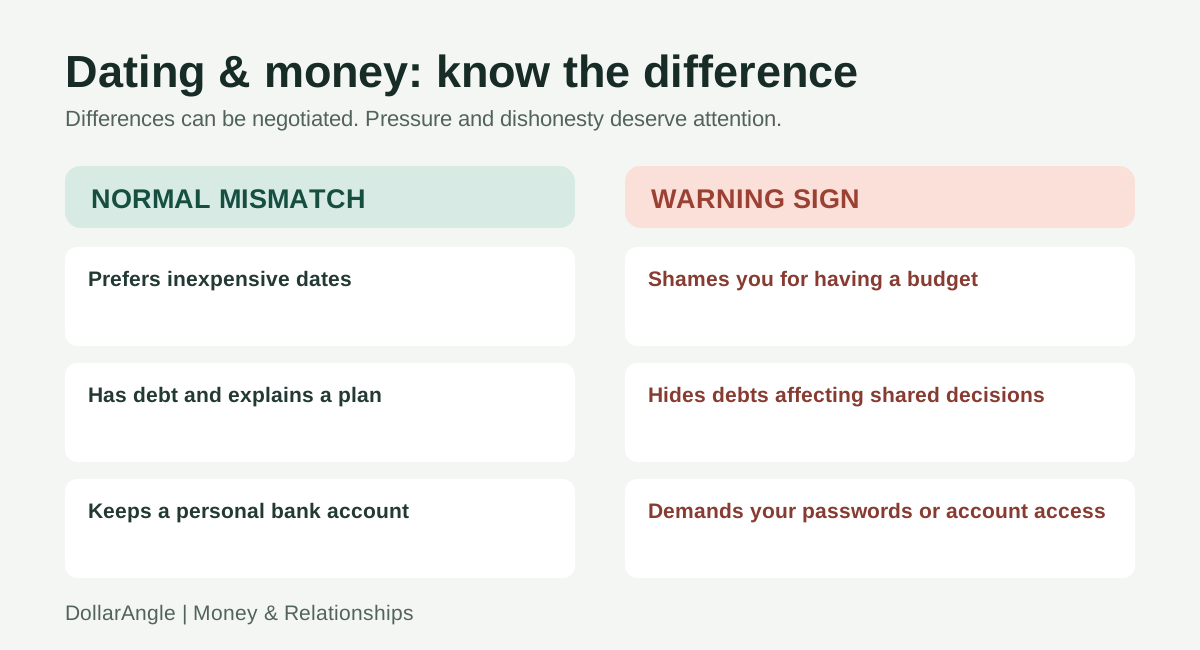
Different budgets call for a conversation. Pressure, deception and control call for firmer boundaries.
What is not automatically a financial red flag?
The internet loves easy labels. Real relationships are more complicated.
- Earning less than you: Income alone does not measure honesty, contribution or ambition.
- Having student loans: The type of debt, repayment terms and management matter more than the balance alone.
- Living with family: It may reflect caregiving, culture, high housing costs or a deliberate savings strategy.
- Choosing a cheap date: Affordability can be a sign of self-awareness rather than stinginess.
- Being cautious about combining accounts: Maintaining some financial independence is not the same as hiding something.
Look for whether you can make fair, informed decisions together.
The romance-scam exception: When to stop and protect yourself
There is one situation where giving someone the benefit of the doubt can be expensive or dangerous.
The FDIC warns that scammers may build fake online romantic relationships, gain trust, then invent a crisis and request money.
If someone you met online repeatedly avoids meeting or video calls, tells an urgent financial story, asks for transfers, cryptocurrency or gift cards, or demands secrecy, do not send money or financial credentials. Stop the transaction and verify independently. Consider reporting suspected fraud to the platform and relevant authorities.
A real relationship should never require a payment to remain real.
Five questions that reveal compatibility without interrogating your date
Try these naturally over time, not as a checklist delivered across the first dinner:
- “What is something you’re happy to spend money on, and something you don’t care about?”
- “Would you rather plan a trip ahead or book it spontaneously?”
- “What did your family teach you about money?”
- “How do you usually decide whether something is affordable?”
- “If we eventually shared a home, what would splitting costs fairly mean to you?”
The words matter, but the ability to respond with curiosity matters more.
A simple dating-money boundary plan
Before a relationship becomes financially intertwined, consider three stages:
Early dating: Choose dates you can afford, pay your own obligations, and avoid loans, co-signing or sharing credentials.
Exclusive or serious relationship: Talk about financial goals, approaches to spending and saving, material debt and the expectations you each bring to dating.
Before moving in or marrying: Discuss reliable income, fixed bills, credit, debt, joint-versus-separate accounts, emergency savings, and what happens if the relationship ends. Put major shared financial agreements in writing where appropriate.
You do not have to merge finances on the same timeline as your feelings.
The bottom line
The real financial green flag is not a luxury car, a perfect credit score or the ability to pay for every dinner.
It is someone who can say:
“Here’s what I can afford. Here’s what I’m working on. What feels fair to you?”
Compatibility does not mean having identical salaries or habits. It means being able to tell the truth, respect boundaries and build a plan that works for both people.
For a deeper conversation once things become serious, read our companion guide, 7 money conversations every couple should have.
DollarAngle provides general financial education, not personalized financial, legal or relationship counseling. Seek qualified professional support when decisions involve contracts, shared debt or safety.