The DollarAngle
From parental leave and childcare to insurance and emergency savings, a realistic financial checklist for couples preparing to become parents.
The tiny socks are adorable. The stroller options are endless. The nursery paint samples are taking over the kitchen.
Meanwhile, the biggest questions might still be unanswered.
“How many weeks will you actually get paid while you’re off?”
“I assumed it was twelve.”
“Paid?”
“I’m not sure.”
Preparing for a baby is about much more than shopping. The most important financial decisions often involve income, care, protection and the plan for when nobody has slept properly.

1. Build a leave budget around confirmed benefits, not assumptions
In the United States, federal Family and Medical Leave Act protections can provide eligible workers with unpaid, job-protected leave. Not everyone qualifies, and state programs and employers may provide additional benefits. The U.S. Department of Labor explains the FMLA eligibility and leave rules.
Ask both employers: How long can I be away? Which weeks are paid? At what percentage of normal pay? What happens to health insurance deductions? Do I have to use accrued leave?
Make a cash-flow plan that includes your actual expected pay during each month.
2. Estimate the first-year cost, including childcare
Diapers and clothes matter, but recurring childcare can dominate the budget. Prices vary dramatically by location, provider and age.
Get real quotes from nearby licensed providers. Check availability and waitlists early. Decide whether reduced working hours, relatives’ help or childcare services fit your circumstances.
Do not assume staying home saves the exact cost of daycare. Compare lost income, employer benefits, retirement savings and future career effects too.
3. Increase your emergency buffer before income changes
An emergency fund is especially useful when medical costs, childcare or working hours change. The appropriate amount depends on job stability, health coverage and your essential expenses.
The CFPB’s emergency-savings guidance encourages building savings that help absorb unexpected costs. Start with a reachable target, automate contributions and keep emergency cash accessible.
4. Understand insurance before the due date
Review your current health plan’s deductible, out-of-pocket maximum, in-network providers, maternity care, and coverage for the child. Ask the insurer how to add a newborn and what deadlines apply.
The HealthCare.gov guidance on qualifying life events describes when certain family changes can allow enrollment outside the usual window. Employer plans can have their own enrollment rules and deadlines.
Consider whether life insurance or disability coverage should change when others depend on your income. Coverage decisions require individual analysis, not one-size-fits-all dollar targets.
5. Put everyday costs in a separate baby budget
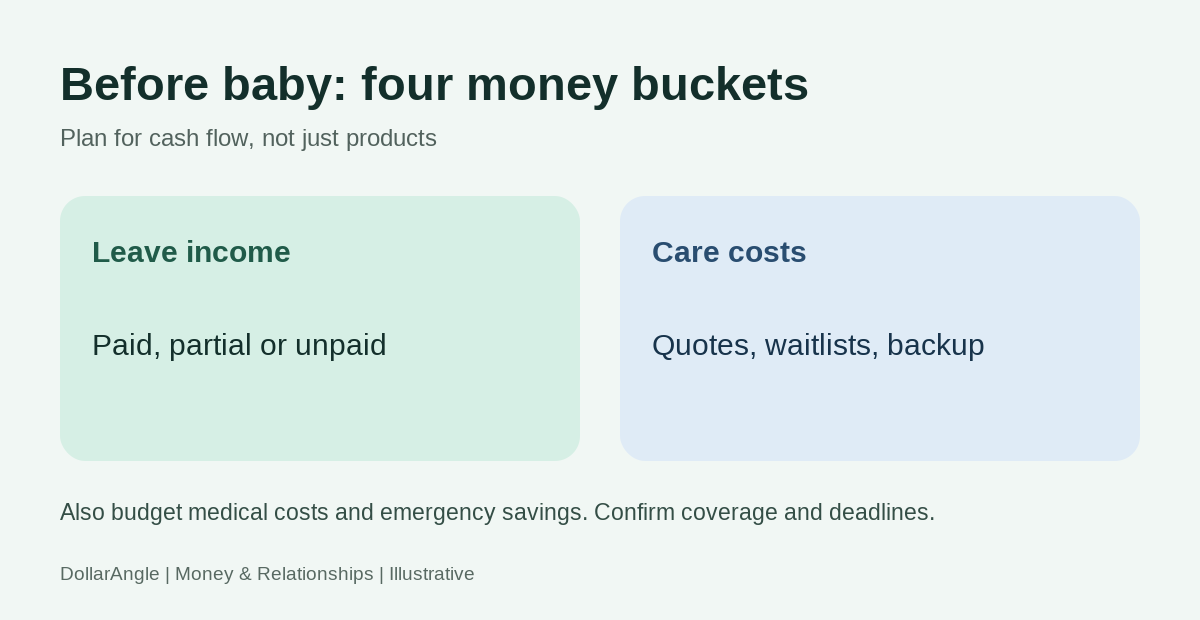
Include medical costs, home equipment, ongoing supplies, childcare and a backup-care reserve. Borrow or buy secondhand selectively when safe and appropriate, especially for items that don’t need to be brand-new.
Beware of the idea that every parenting product is essential. A useful question is: Would this purchase solve a real problem in our household, or does it mostly promise reassurance?
6. Decide how unpaid care and household labor will be shared
“I thought you’d handle daycare drop-off because you work from home.”
“Working from home doesn’t mean I’m free for three hours each morning.”
Money and labor cannot be separated neatly. Plan who handles appointments, nighttime care, pickups, meal preparation and sick days. Revisit the arrangement after the baby arrives.
If one partner reduces paid work, factor in retirement contributions and financial autonomy. Both people should have access to essential household money information.
7. Update beneficiary and estate planning details
Check beneficiaries on insurance and retirement accounts, and discuss wills, guardianship and any documents appropriate to your situation. A qualified local attorney can help with legal documents, particularly when family structures or ownership are complicated.
Also review whether your child may qualify for tax benefits or savings options based on current rules. Confirm the eligibility rules for the relevant tax year rather than assuming older figures still apply.
8. Practice the budget before the baby arrives
If you expect childcare to cost $1,200 monthly, try setting aside a similar amount now for a few months if feasible. This is a planning exercise, not a forecast. It reveals whether you need to lower other expenses before the commitment begins.
If one parent expects a period of unpaid leave, try living on the projected reduced income. Adjust the plan while there is room to change course.
The conversation worth having tonight
“What would worry you most financially after the baby comes?”
“Having to ask for money when I’m not earning.”
“Then let’s build our plan so we both have access, independence and a say.”
The best financial gift to your future family is not the fanciest nursery. It is a workable plan that protects your income, cash flow and each other.
Related: How couples can talk about money without turning every discussion into an argument.
General education only. Insurance, employment rights, tax rules and legal protections depend on your circumstances and location.