The DollarAngle
The rent-vs-buy decision depends on time horizon, total ownership cost, financing, flexibility and what you would do with the money otherwise, not on the slogan that rent is throwing money away.
“Renting is throwing money away.”
“Buying is a trap.”
Both statements are too simple to be useful.
Housing is simultaneously a consumption decision, a financing decision, a lifestyle decision and, if you buy, an asset decision.
That is why the right comparison is not rent versus mortgage payment.
It is the full cost and flexibility of renting versus the full cost and risk of owning.
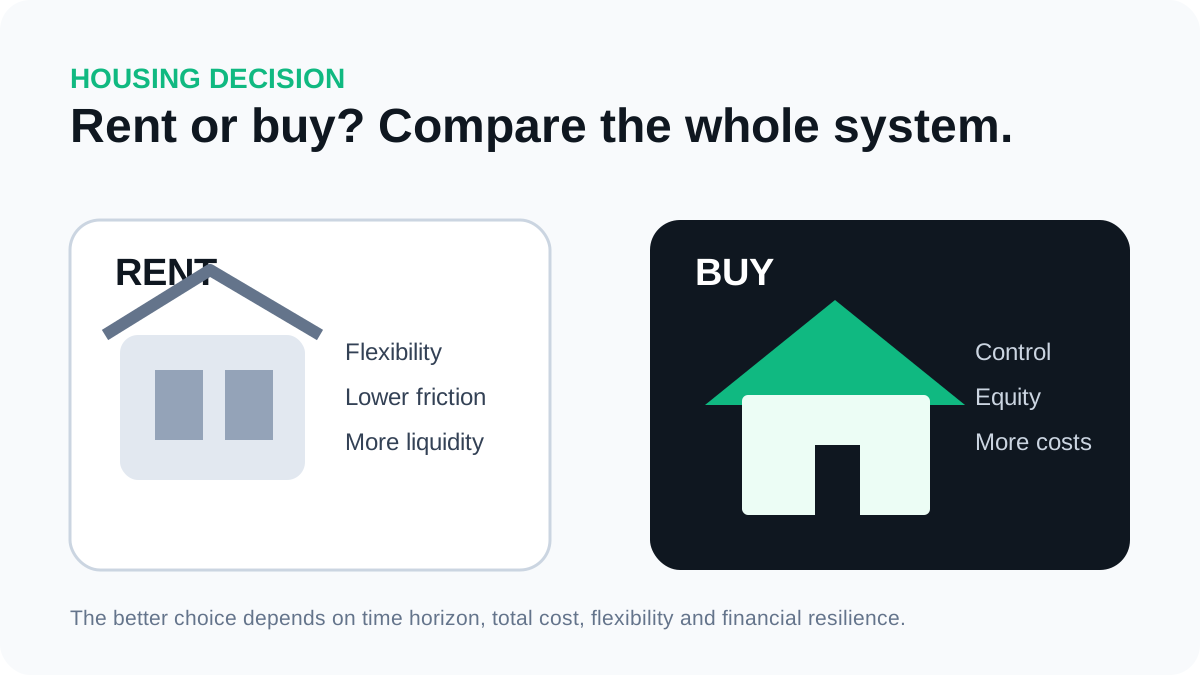
The rent-versus-buy decision is a system comparison, not a one-line slogan.
What a homeowner actually pays
A mortgage payment can include or sit alongside several costs:
- principal,
- interest,
- property taxes,
- homeowners insurance,
- mortgage insurance when applicable,
- homeowners association dues,
- repairs and maintenance,
- utilities that may differ from renting.
There are also upfront transaction costs such as appraisal, lender fees, title-related costs, inspections and other closing expenses.
The CFPB emphasizes that buying a home costs more than the listing price and advises consumers to evaluate both upfront and ongoing expenses.
Principal is different from interest
Part of a mortgage payment can reduce loan principal, which increases your equity in the property.
Interest is the cost of borrowing.
Property taxes, insurance and maintenance are ownership costs.
They do not become equity simply because you own the home.
This distinction matters because comparing the entire mortgage payment with rent can make ownership look better or worse depending on what is included.
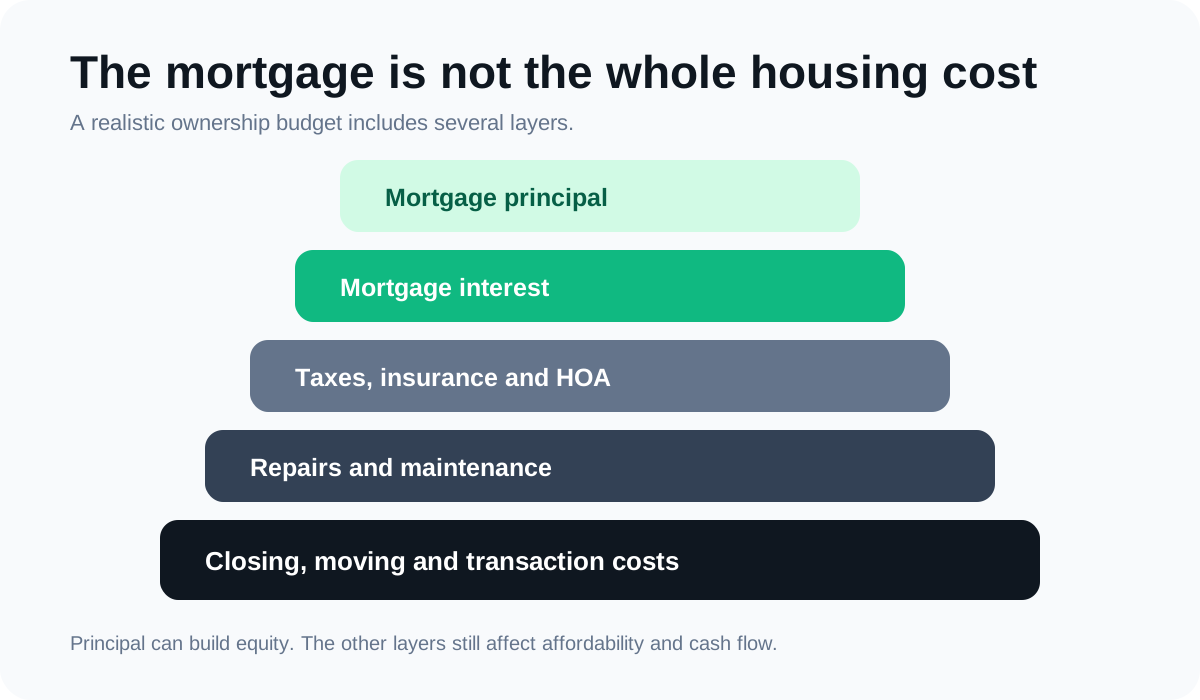
The mortgage is only one part of the ownership equation.
Renting buys flexibility
Rent does not create home equity, but it purchases housing and flexibility.
Renters can often move with less friction, avoid direct responsibility for major structural repairs and keep more capital liquid rather than tying it up in a down payment and property.
That flexibility can be valuable for someone who expects to change cities, careers or household size.
Flexibility has financial value even though it does not appear as a line item in a mortgage calculator.
Time horizon matters
Buying and selling are expensive transactions.
The CFPB notes that purchasing may make more sense when you are willing to stay put for a few years because transaction costs and the possibility of price declines can make short ownership periods risky.
If you buy and need to sell quickly, closing costs, selling costs, price changes and the early structure of mortgage payments can all work against you.
The shorter your expected stay, the more important transaction friction becomes.
The opportunity cost of the down payment
A down payment is not lost money.
It becomes home equity.
But it also becomes less liquid and cannot simultaneously be invested elsewhere.
So a fair rent-versus-buy comparison asks what would happen to the renter’s unused capital.
If the renter spends every dollar saved from not buying, that produces one outcome.
If the renter invests the difference consistently, that produces another.
Likewise, a homeowner who continually extracts equity or neglects maintenance may not build wealth as efficiently as the simple story suggests.
The comparison should include what each person actually does with the financial difference.
Home prices do not move in a straight line
A home can appreciate over long periods and still decline over the years when you need to sell.
Local markets matter.
Employment concentration, interest rates, housing supply, taxes, insurance costs, climate risk and migration patterns can all affect outcomes.
Leverage also changes the experience because a relatively small down payment can control a much larger asset.
That can magnify equity gains.
It can also magnify equity losses.
Do not use lender approval as your budget
A lender tells you how much it may be willing to lend.
That is not the same as how much you should comfortably spend.
The CFPB specifically advises buyers to focus on what fits their own budget and priorities rather than treating the maximum approved loan as the definition of affordability.
Your personal housing budget still has to leave room for:
- emergency savings,
- retirement contributions,
- childcare,
- transportation,
- travel,
- health costs,
- and the rest of your life.
A technically approved mortgage can still be financially uncomfortable.
Use a total-cost checklist
Before buying, estimate:
- total monthly mortgage payment,
- property taxes,
- homeowners insurance,
- mortgage insurance if applicable,
- HOA dues,
- maintenance reserve,
- closing and moving costs,
- expected time in the home,
- emergency savings remaining after closing,
- what happens if income falls.
Then compare that with the realistic cost of renting a similar property.
Do not compare a two-bedroom apartment with a four-bedroom house and call it a financial test.
Compare housing alternatives that actually solve a similar problem for your household.
When buying becomes more attractive
Buying may fit better when:
- you expect to stay for a meaningful period,
- your income is stable enough for the obligation,
- you retain emergency cash after the purchase,
- the all-in monthly cost fits comfortably,
- you value control and stability,
- local pricing is reasonable relative to your alternatives.
Buying can also create forced savings through principal repayment, but that benefit is only useful if the total financial structure remains sustainable.
When renting becomes more attractive
Renting may fit better when:
- job or geographic flexibility matters,
- buying would exhaust your liquidity,
- ownership costs are unusually high,
- you expect to move relatively soon,
- comparable rent is much cheaper than ownership,
- you would invest part of the financial difference instead of simply spending it.
Renting can be a rational financial choice.
It is not evidence that someone has failed to become an adult.
The DollarAngle
Rent is not automatically wasted money, and a home is not automatically a great investment.
Buy when the entire ownership system fits your life and balance sheet.
Rent when flexibility and financial optionality are more valuable.
The correct answer is not ideological.
It is a calculation plus a lifestyle choice.
Sources and further reading
- CFPB: Financial considerations of buying a home
- CFPB: What are all the costs of buying a home?
- CFPB: Figure out how much you want to spend
- CFPB: Consider whether it is the right time for you to buy
DollarAngle provides financial education and commentary for informational purposes only. Real-estate markets, taxes, insurance and transaction costs vary by location and borrower.