The DollarAngle
Do not treat interest-rate headlines as abstract macroeconomics. Translate them into four buckets: debt, cash, housing and investments.
Interest rates can sound like something that matters only to economists or bond traders.
In reality, they are one of the most important prices in your financial life: the price of borrowing money and, indirectly, the reward available for lending or saving it.
When rates move, the effects spread through credit cards, mortgages, savings accounts, business investment, bond prices, currencies and stock valuations.
You do not need to become a macroeconomist to use this information.
You need a framework for translating rate changes into your own financial life.
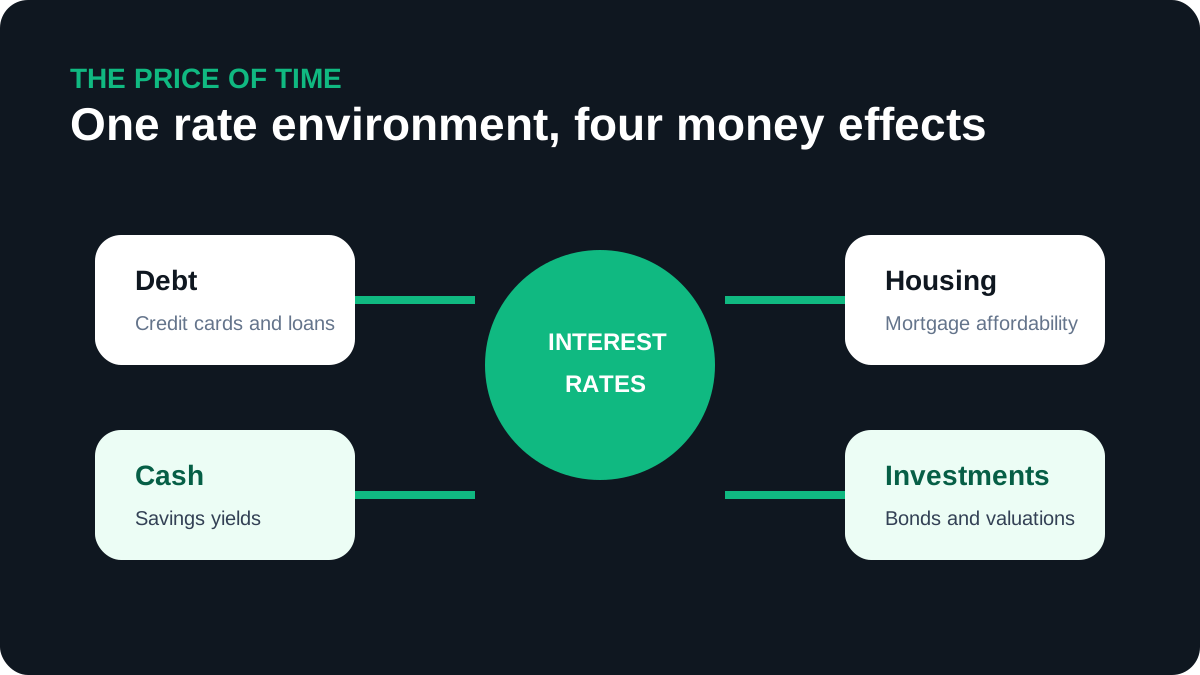
Interest rates travel through your finances in several directions at once.
Start with the Federal Reserve, but do not stop there
In the United States, the Federal Reserve influences short-term financial conditions through monetary policy, including the target range for the federal funds rate.
That policy rate does not mechanically set every consumer borrowing rate.
Mortgage rates, for example, are influenced by longer-term bond markets, inflation expectations, economic conditions and credit risk.
Still, changes in monetary policy can ripple through the system.
The useful question is not simply, “Did the Fed raise or cut?”
It is, “Which parts of my financial life are sensitive to this environment?”
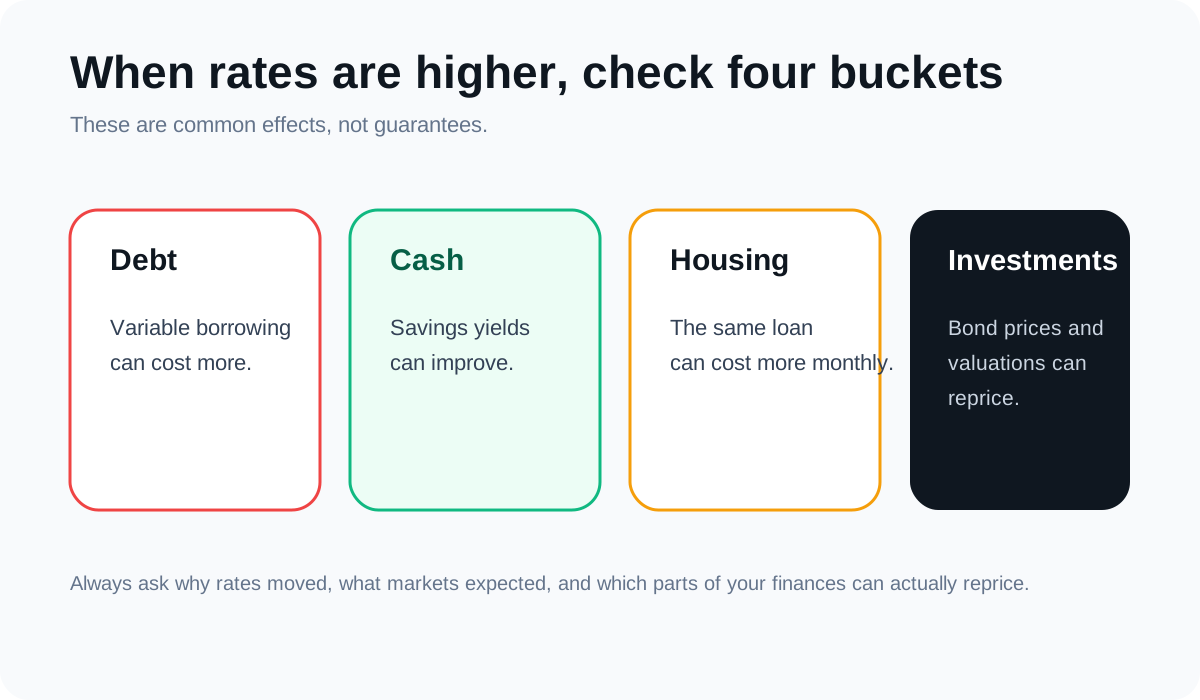
Use four buckets to translate rate headlines into practical money decisions.
Bucket 1: Variable-rate debt
Variable-rate borrowing is often the most immediately sensitive.
Credit-card annual percentage rates, some home-equity borrowing and other floating-rate loans can become more or less expensive as benchmark rates and lender pricing change.
If rates are high, carrying revolving balances can become particularly costly because interest works against your cash flow month after month.
A useful audit is to list every debt and mark whether the rate is:
- fixed,
- variable,
- promotional and temporary,
- or unknown.
The unknown category deserves attention first.
You cannot manage a borrowing cost you have never checked.
Bucket 2: Cash and savings
Higher-rate environments can improve yields on savings accounts, money-market products and short-term government securities.
That changes the opportunity cost of leaving large amounts in a low-paying checking account.
But a higher cash yield does not automatically make cash the best long-term investment.
Cash is useful for:
- emergencies,
- near-term goals,
- planned purchases,
- and money that cannot tolerate a large short-term loss.
Long-term goals may require accepting investment risk in pursuit of growth.
Match the asset to the job.
Bucket 3: Housing
Mortgage rates can radically change affordability even when the home price stays the same.
A higher mortgage rate increases the payment attached to a given loan amount.
That means buyers should evaluate total monthly housing cost, not simply ask whether home prices have fallen.
The CFPB advises buyers to consider principal, interest, property taxes, insurance, mortgage insurance when applicable, association fees and other ownership costs.
If rates fall later, refinancing may become possible.
It is never guaranteed.
Refinancing also has costs.
“Marry the house, date the rate” is marketing language, not a financial plan.
Bucket 4: Investments
Interest rates influence asset valuations because investors compare opportunities.
When relatively low-risk assets offer higher yields, riskier assets may need to offer more attractive expected returns to compete.
Higher rates can also increase borrowing costs for businesses and real-estate projects.
Bonds are directly affected as well.
When market rates rise, existing fixed-rate bonds can become less attractive relative to newly issued bonds, which can push their prices lower.
The reverse can occur when rates fall.
Stocks are more complicated.
Some businesses handle higher rates better than others depending on debt levels, pricing power, profitability and growth expectations.
This is why a single rate headline rarely tells you exactly what the stock market should do next.
What rate cuts do not guarantee
A rate cut is not automatically bullish for every asset.
Why the central bank is cutting matters.
Cuts made because inflation is improving while growth remains healthy can be interpreted differently from cuts made because the economy is deteriorating rapidly.
The market also cares about what was expected before the announcement.
A widely anticipated cut may already be reflected in asset prices.
So a headline such as “Fed cuts rates” is only the first sentence of the story.
The next questions are:
- Why did it cut?
- What does the Fed expect for inflation and employment?
- What were markets already pricing in?
- How did bond yields respond?
- What changes for consumers and businesses?
Your practical interest-rate checklist
When rate headlines appear, review four things.
1. Debt
Which balances can reprice?
Which debts are expensive enough to prioritize?
2. Cash
Is your emergency fund earning a competitive yield while remaining liquid and appropriately protected?
3. Housing
If you plan to buy, what is the total payment at today’s actual financing cost, not at a hoped-for future rate?
4. Portfolio
Is your portfolio diversified enough to survive more than one rate scenario?
A plan built only for falling rates can be fragile when inflation or policy surprises in the other direction.
A simple way to think about rates
Interest rates change the price of time.
Borrowing pulls future income into the present.
The interest rate is part of the price you pay for doing that.
Saving and lending move money in the opposite direction.
The return you receive is part of the compensation for waiting.
That is why rates show up almost everywhere in finance.
They connect today’s choices with tomorrow’s money.
The DollarAngle
Interest rates matter because they change the price of time.
So the next time a rate decision dominates the news, do not stop at “markets up” or “markets down.”
Translate it into your:
- debt,
- cash,
- housing,
- and investments.
That is the dollar angle.
Sources and further reading
- Federal Reserve: Monetary policy
- CFPB: Figure out how much you want to spend on a home
- CFPB: What costs come with taking out a mortgage?
- Investor.gov: Asset allocation and diversification
DollarAngle provides financial education and commentary for informational purposes only. Interest rates and market conditions can change quickly.