The DollarAngle
A market headline is information, not an instruction. Translate it through your goals, time horizon, diversification and cash needs before changing a long-term plan.
Financial news is built around movement.
Stocks surged.
Stocks plunged.
A sector entered a correction.
An index hit a record.
Investors “fled” one asset and “piled into” another.
Those headlines can be useful.
They can also make a long-term investor feel as if every trading day requires a decision.
Usually it does not.
The better skill is learning how to translate market news into context before allowing it to change your behavior.
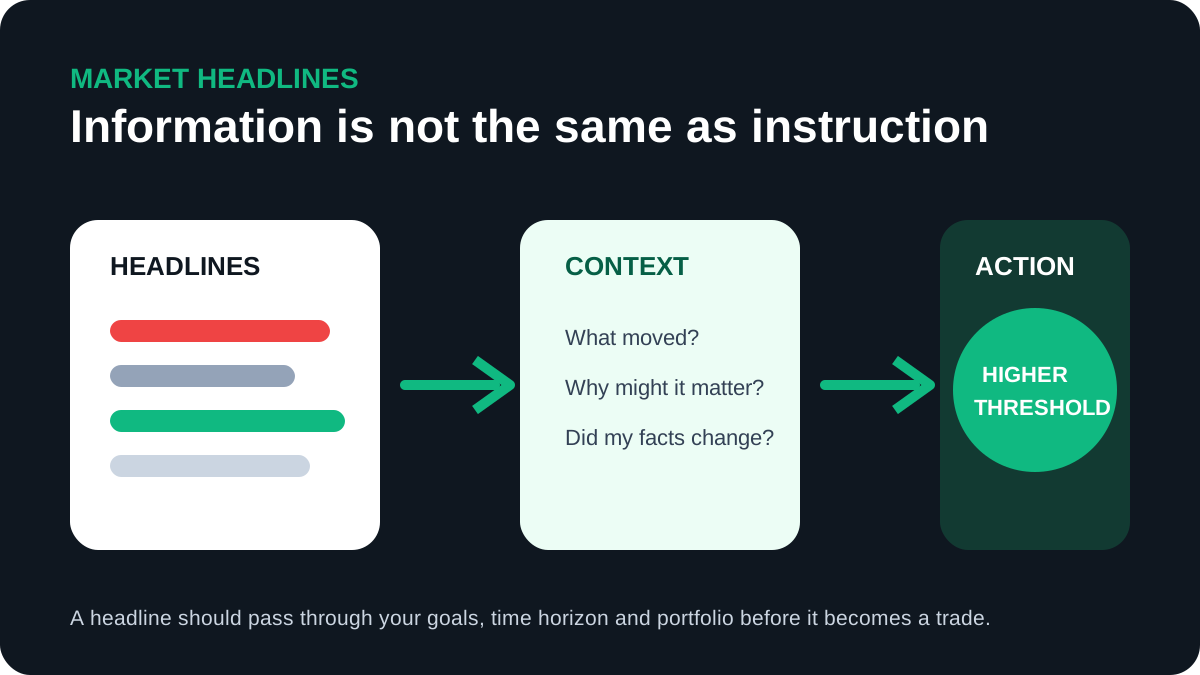
The headline is the beginning of the analysis, not the end.
Start by asking what actually moved
“The market” is not one thing.
A headline may refer to:
- the S&P 500,
- the Dow Jones Industrial Average,
- the Nasdaq Composite,
- small-cap stocks,
- a specific sector,
- international markets,
- bonds,
- commodities,
- crypto assets.
A technology-heavy index can fall while other sectors rise.
A large index can reach a record while many individual stocks remain below previous highs.
Before reacting, identify the actual asset and the size of the move.
A 1% decline in one index and a 15% decline in one stock are not the same event.
Then ask why commentators think it moved
Market explanations are often written after the fact.
A single trading day can be influenced by:
- interest rates,
- company earnings,
- economic data,
- positioning,
- geopolitics,
- currencies,
- commodities,
- and investor sentiment.
Be cautious when one headline presents a single clean explanation for a complicated market.
Instead of asking, “What caused stocks to fall?” ask:
What changed in the information investors are pricing?
That question leaves room for uncertainty.
Price movement and business change are not identical
A diversified stock fund can decline because investors are willing to pay a lower valuation even if the underlying companies remain profitable.
An individual stock can fall because the business itself deteriorated.
Those are different situations.
For a long-term investor, the response should depend on why the asset is owned and whether the underlying case changed, not simply whether today’s price is red or green.
Price is information.
It is not always the full story.
Your time horizon changes the meaning of volatility
Money needed for a home purchase next year should not be exposed to market risk in the same way as retirement money needed decades from now.
Investor.gov emphasizes that asset allocation should reflect both time horizon and risk tolerance.
That means the same market decline can be:
- uncomfortable noise for a diversified long-term investor,
- a serious planning problem for someone who needs the money next month.
The headline can be identical.
The financial meaning is not.
Records are less important than they sound
Stock indexes can set new highs repeatedly over long periods because businesses grow, inflation lifts nominal values and markets incorporate expectations about future earnings.
A record high does not automatically mean a crash is imminent.
Likewise, a correction does not automatically mean the economy is entering a depression.
Price level alone is not enough information.
Context matters more than the emotional weight of the phrase “all-time high” or “market crash.”
Separate three kinds of market news
A useful framework is to divide market stories into three buckets.
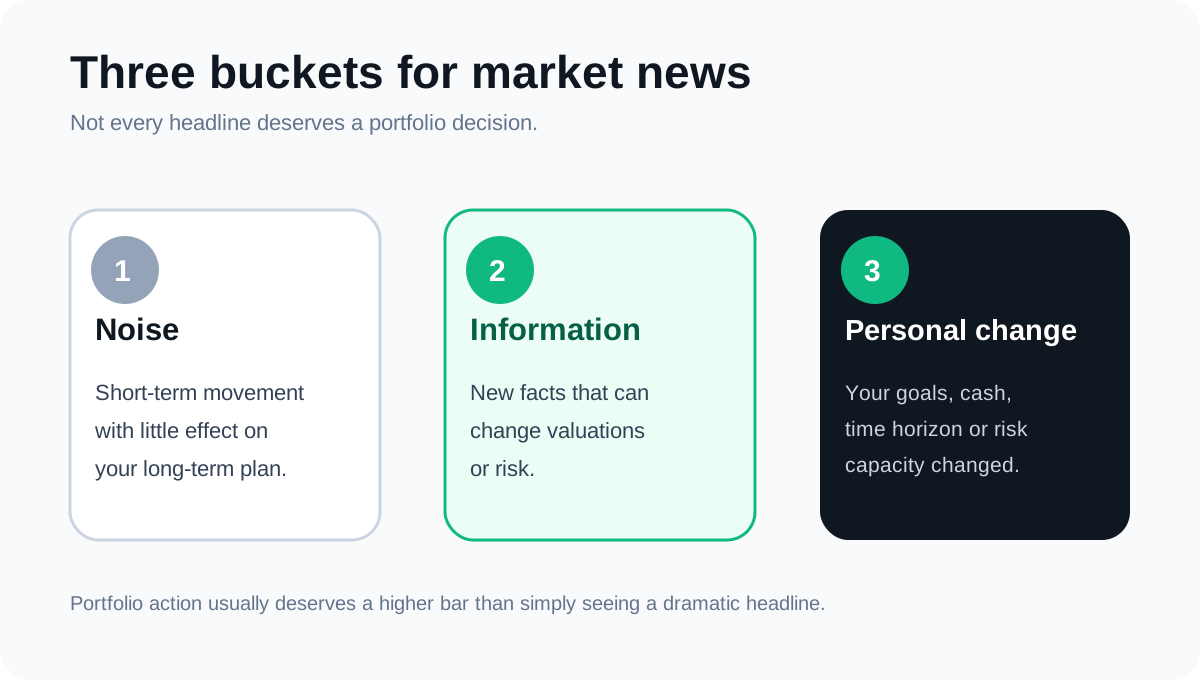
Most headlines belong in the first two buckets. Portfolio changes usually deserve a higher bar.
1. Noise
Short-term moves with little effect on your long-term thesis or financial plan.
Examples can include a small daily index move, routine analyst commentary or a short-lived reaction to a headline.
2. Information
New facts that matter for valuations or risks.
Examples can include earnings deterioration, material policy changes, changes in interest rates, new regulation or meaningful economic shifts.
Information can matter without requiring an immediate trade.
3. Actionable personal change
Something changed in your life or portfolio.
Examples include:
- your time horizon shortened,
- your emergency fund was depleted,
- your risk capacity changed,
- your portfolio became overconcentrated,
- your goals changed,
- or your asset allocation drifted materially from the plan you intended.
The third bucket is often more important than the first two.
Beware of portfolio decisions made for emotional relief
Selling during a sharp decline can make anxiety disappear immediately.
That emotional relief can feel like evidence that the decision was correct.
But the financial result depends on what happens after the sale and whether there is a disciplined plan for getting back in.
This is one reason market timing is difficult.
You need a decision about when to leave and another decision about when to return.
FINRA notes that trying to time markets can backfire, and regular investing can help some investors reduce the urge to make emotional timing decisions.
The emotional benefit of selling should not be confused with proof that the investment decision was financially sound.
Build a pre-written volatility plan
Before the next decline, decide what you will check.
For example:
- Has my emergency cash changed?
- Has my time horizon changed?
- Has my portfolio become concentrated?
- Has the investment thesis materially changed?
- Is my asset allocation outside the range I intentionally chose?
- Am I reacting to price alone?
A written checklist creates friction between an emotional headline and a financial action.
That friction can be valuable.
What deserves immediate attention?
Not every market headline deserves urgency.
Immediate attention may be reasonable when a story reveals:
- fraud or a serious governance problem in a company you directly own,
- a major change to a security’s structure,
- a material portfolio concentration you did not intend,
- a personal liquidity need that changes your time horizon,
- or a risk you misunderstood when you originally invested.
A broad index moving 2% because traders changed their expectations about a data release is a different category of event.
The more diversified and long-term the portfolio, the higher the bar should usually be for an impulsive change.
The DollarAngle
Markets deserve attention because they affect investments, borrowing costs, retirement accounts and the economy.
But attention is not the same as action.
Use financial news to update your understanding.
Change your plan when the facts or your circumstances justify it, not because a headline made uncertainty feel urgent.
The point of financial news is to become better informed.
It is not to turn every market day into a referendum on your entire future.
Sources and further reading
- Investor.gov: Asset allocation and diversification
- Investor.gov: Introduction to investing
- FINRA: The benefits and limitations of dollar-cost averaging
- FINRA: Investor tips for turbulent markets
DollarAngle provides financial education and commentary for informational purposes only. Investing involves risk, including possible loss of principal.