The DollarAngle
An employer match is part of your compensation package. Understand the formula and vesting rules before leaving it unused while searching for more exciting investments elsewhere.
Investing content naturally gravitates toward exciting assets: the stock with a new product, the crypto token that doubled, or the real-estate market everyone is discussing.
Meanwhile, one of the most valuable benefits available to many workers can sit quietly inside payroll settings: the employer retirement match.
It is not flashy.
It can still matter enormously.
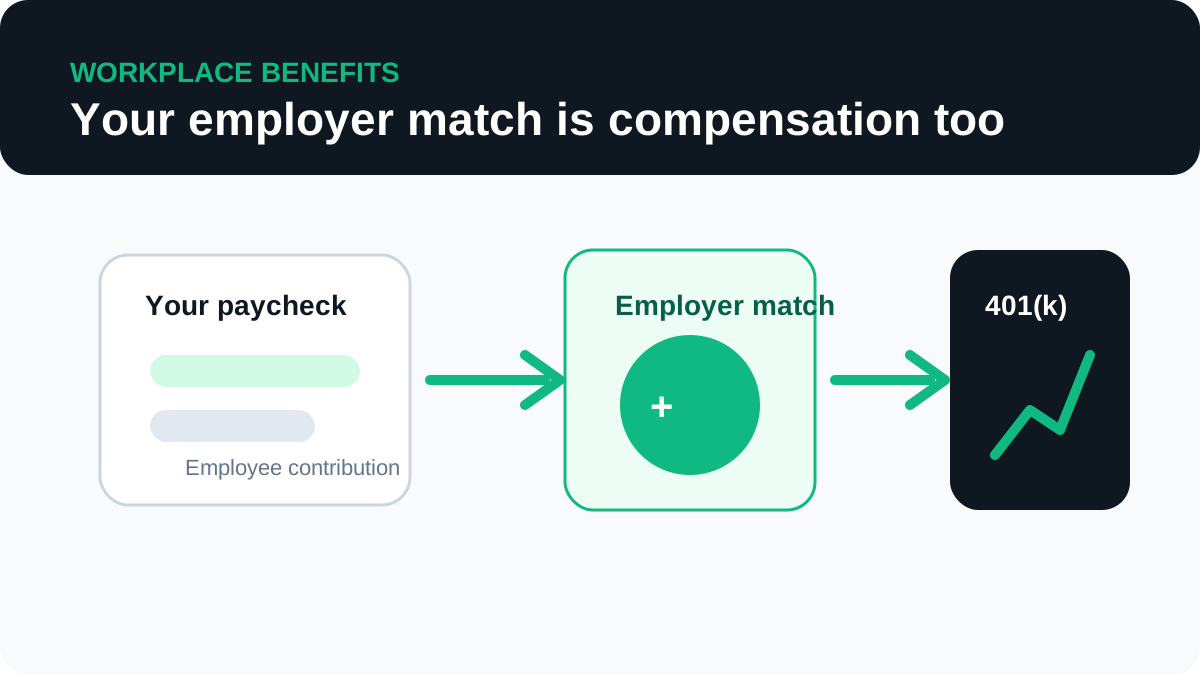
Your workplace retirement plan is part of your compensation system, not just another investment account.
What an employer match is
In many workplace retirement plans, an employer contributes additional money when an employee contributes from salary.
The formula varies by plan.
One employer might match a percentage of what you contribute up to a limit.
Another might use a different structure.
Some plans also make non-matching employer contributions.
The IRS advises workers to review plan information so they understand the matching formula and how much they need to contribute to receive the available match.
Why it deserves attention
A match changes the economics of saving because your own contribution can trigger additional employer money.
That does not mean every spare dollar should always go into a 401(k) before every other goal.
A household with no emergency savings and severe high-interest debt has competing risks.
But ignoring a match without understanding it can mean leaving part of your compensation unused.
The key is to know exactly what the plan offers before deciding.
Read the actual formula
Do not rely on a coworker’s summary.
Find your Summary Plan Description or other official plan materials and determine:
- what percentage or amount is matched,
- what employee contribution is required to receive the maximum available match,
- whether the match is calculated per paycheck,
- whether the plan offers a year-end true-up,
- when employer contributions become vested,
- and what investment options and fees apply.
These details can materially change the value of the benefit.
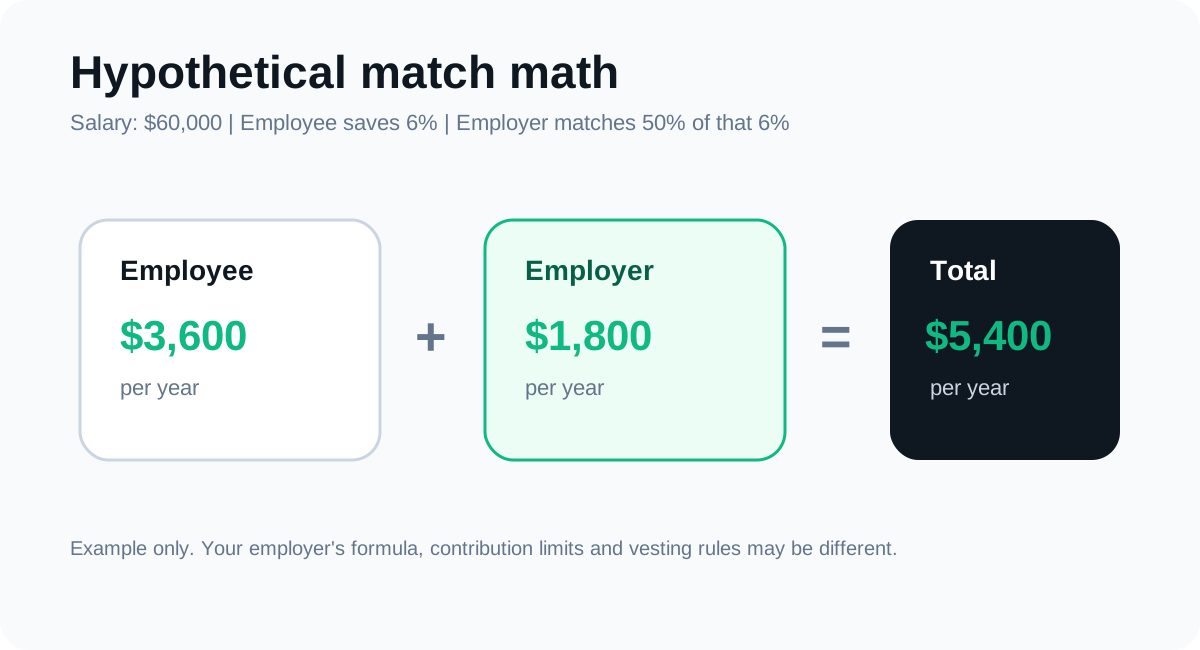
Hypothetical example only. Actual matching formulas vary by employer and plan.
A simple match example
Suppose a worker earns $60,000 per year.
The employer hypothetically matches 50% of employee contributions up to 6% of salary.
If the employee contributes 6%:
- employee contribution: $3,600 per year,
- employer match: $1,800 per year,
- total added to the account: $5,400 per year before investment gains or losses.
That does not mean every employer uses this formula.
It shows why the details matter.
A seemingly small change in contribution rate can determine whether a worker receives the full match available under the plan.
Understand vesting
Vesting means ownership.
The IRS states that an employee’s own elective deferrals are always 100% vested.
Employer contributions can follow different vesting schedules depending on the type of plan and its design.
That means you can sometimes leave a job before owning all of certain employer-funded contributions.
A generous-looking match can therefore have a different practical value depending on:
- how long you expect to stay,
- the plan’s vesting schedule,
- and the type of employer contribution.
This does not make the benefit unimportant.
It means the vesting schedule belongs in the analysis.
Pre-tax versus Roth contributions
Many 401(k) plans allow traditional pre-tax contributions, Roth contributions, or both.
The tax treatment differs.
Traditional elective deferrals generally reduce current federal taxable income, with distributions generally taxable later.
Roth elective deferrals are included in current taxable income, while qualified distributions can be tax-free.
Which treatment is better depends on your circumstances, including current and future tax rates, eligibility, plan rules and other retirement assets.
Avoid treating one option as universally superior.
The account is not the investment
A 401(k) is an account structure.
Inside it, you still choose investments from the plan menu.
Common options can include:
- target-date funds,
- broad stock funds,
- international funds,
- bond funds,
- stable-value funds,
- or other strategies.
Review costs, diversification and risk rather than assuming the default option is automatically right or automatically wrong.
Investor.gov notes that target-date funds are designed to change asset allocation over time, but funds with the same target year can differ in strategy, risk and fees.
Watch for the contribution timing detail
Some plans calculate matches each paycheck.
Others may include a year-end true-up that can help employees who reached their annual contribution target early.
If your employer matches per paycheck and offers no true-up, contributing too aggressively early in the year can sometimes reduce the total match received later if you stop making contributions before year-end.
This is plan-specific.
Check the documents instead of assuming.
Avoid the “retirement is too far away” trap
The distance to retirement is exactly why early contributions can matter.
Compounding needs time.
Contributions made earlier have more years in which potential earnings can generate additional earnings.
No return is guaranteed.
But time is one resource you cannot recover later.
What if you need the money before retirement?
This is why a retirement account should not replace emergency savings.
Retirement plans have rules, taxes and possible penalties around certain distributions.
Building adequate liquid reserves can reduce the chance that a temporary emergency forces you to disrupt long-term assets.
The financial system works better when short-term needs and long-term goals have separate jobs.
The DollarAngle
If you have a workplace retirement plan, learn it before hunting for exotic opportunities.
Your match, tax treatment, fees, vesting schedule and investment menu are part of your compensation system.
Boring does not mean unimportant.
Sometimes the smartest investment move is understanding the benefit already sitting in your paycheck.
Sources and further reading
- IRS: Matching contributions help you save more for retirement
- IRS: 401(k) resource guide for participants
- IRS: Retirement topics, vesting
- IRS: Vesting schedules for matching contributions
- Investor.gov: Target date funds
DollarAngle provides financial education and commentary for informational purposes only. Retirement plan rules, tax treatment and eligibility vary.