The DollarAngle
Dollar-cost averaging is useful because it creates a process you can follow through market noise. It does not eliminate market risk or guarantee a better return than investing a lump sum immediately.
Dollar-cost averaging sounds more technical than it really is.
The basic idea is simple: invest the same amount of money on a regular schedule, regardless of whether markets are rising or falling.
For many workers, this already happens automatically through a 401(k) or another workplace retirement plan. Money leaves each paycheck and is invested on a fixed schedule without requiring a fresh market prediction every two weeks.
FINRA describes dollar-cost averaging as investing equal portions at regular intervals regardless of current market conditions. Investor.gov gives a similar definition and notes that a fixed dollar amount buys more shares when prices are lower and fewer shares when prices are higher.
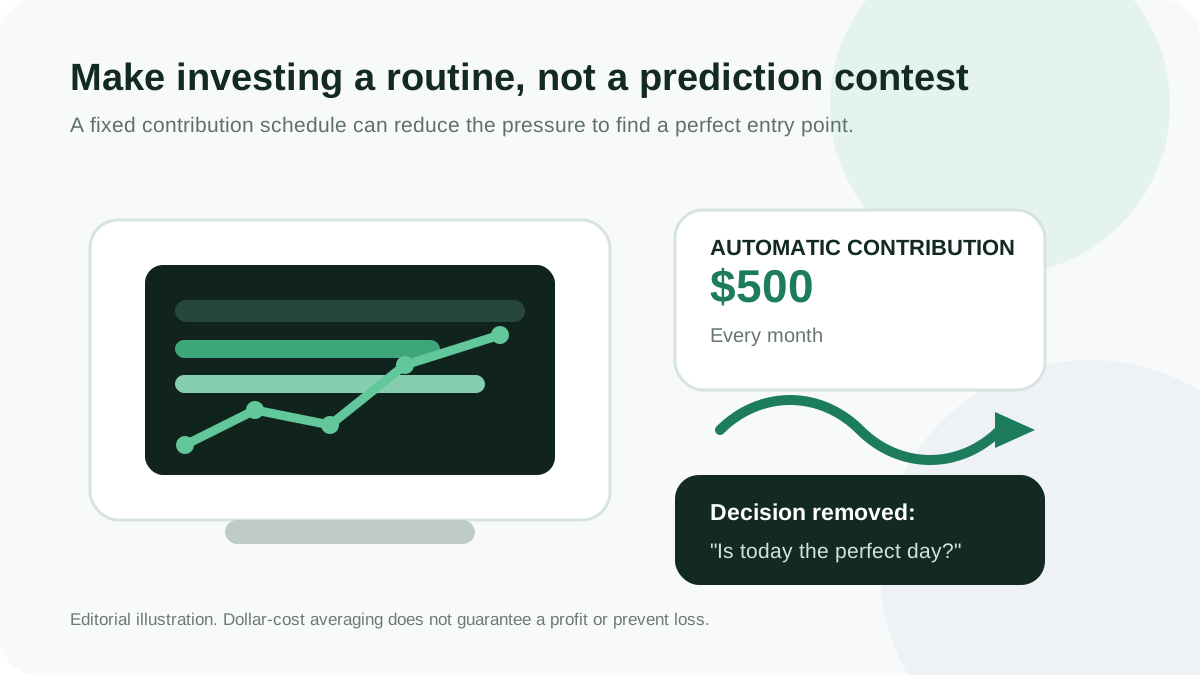
Regular investing can turn one recurring financial decision into a routine instead of a market-timing exercise.
Why people like dollar-cost averaging
Market timing creates an uncomfortable emotional loop.
When prices are rising, investors worry that they are buying at the top.
When prices are falling, they worry that things will get worse.
When markets recover, they often regret waiting.
A fixed investing schedule removes one decision:
“Is today the perfect day to invest?”
You invest according to the plan instead.
That can be especially useful when you are investing money as you earn it over time.
What happens when prices move
If you invest the same dollar amount each period, the number of shares you buy changes with the price.
When prices are lower, your contribution buys more shares.
When prices are higher, it buys fewer shares.
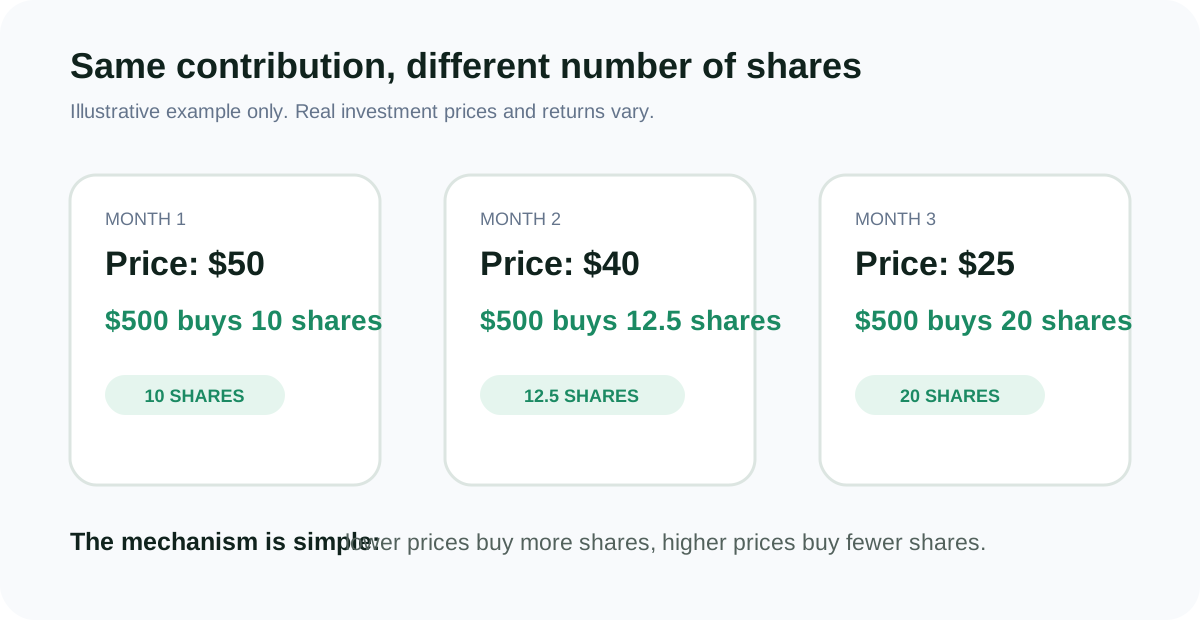
The share count changes automatically with price. This does not mean dollar-cost averaging always produces a lower average purchase price or a better final return.
That last point matters.
Dollar-cost averaging is a process. It is not a guarantee that you will buy cheaply.
If an investment remains expensive, falls permanently, or is simply a poor investment, buying it on a schedule does not solve the underlying problem.
Do not confuse two different situations
People often use the phrase “dollar-cost averaging” for two situations that look similar but have different financial tradeoffs.
Situation 1: Investing money as you earn it
You receive a paycheck every two weeks and invest part of it.
You are not deliberately keeping a large amount of investable cash on the sidelines. You are simply investing money as it becomes available.
This is a natural use of regular investing.
Situation 2: You already have a lump sum in cash
You receive an inheritance, a large bonus, or proceeds from selling a business and already have a substantial amount available to invest.
You then choose to spread those investments over several months instead of investing the money at once.
In this case, part of the money stays in cash longer.
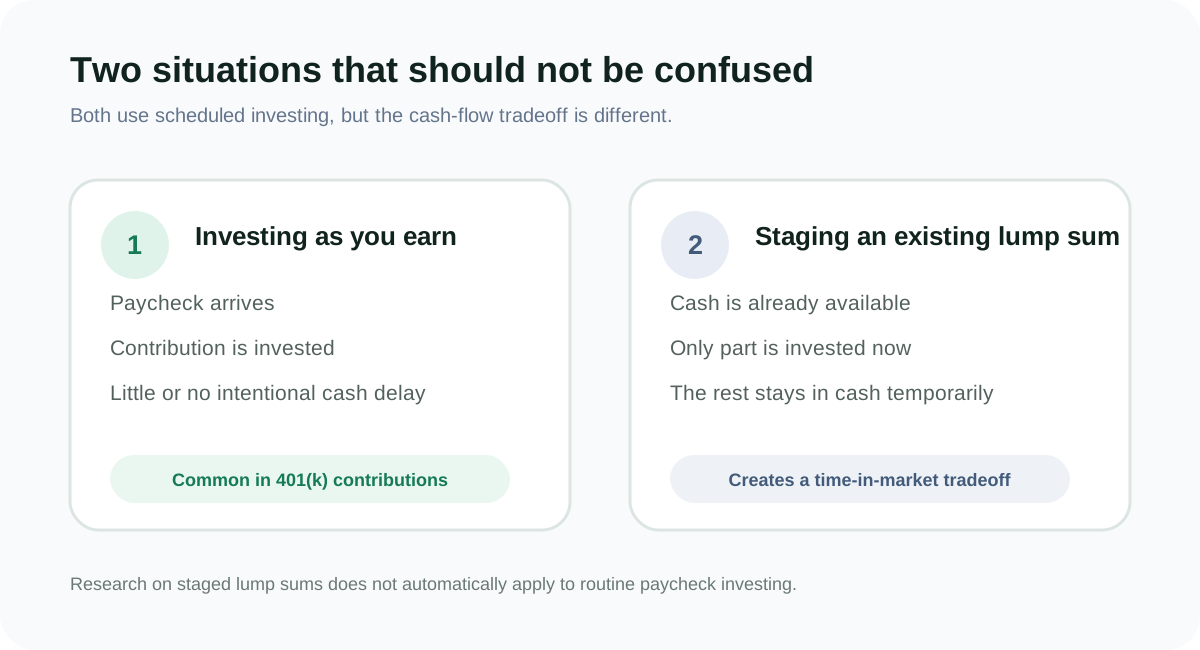
The second situation introduces an opportunity-cost question because some money remains out of the market temporarily.
That distinction is important when reading research about dollar-cost averaging.
Vanguard research comparing immediate lump-sum investing with staged cost averaging found that lump-sum investing historically outperformed the staged approach roughly two-thirds of the time in the periods it studied.
That does not mean lump-sum investing will always win.
It means that delaying investment can carry a cost when markets rise while part of the money remains in cash.
For someone investing directly from each paycheck, that specific opportunity-cost comparison does not apply in the same way because the money was not available earlier.
Dollar-cost averaging does not eliminate risk
You can still lose money.
The strategy does not protect you from:
- buying an overvalued asset,
- investing in a failing company,
- concentration risk,
- inflation,
- broad market declines,
- high fees,
- or panic selling later.
It is a contribution process, not a complete investment strategy.
The investment itself still needs to make sense for your goals, time horizon, risk tolerance, and overall portfolio.
Where regular investing can work especially well
Dollar-cost averaging pairs naturally with:
- workplace retirement plans,
- automatic IRA contributions,
- diversified long-term portfolios,
- recurring brokerage contributions,
- and investors who are prone to market-timing paralysis.
Automation can also help separate investing from daily market emotion.
Instead of making dozens of small decisions throughout the year, you make one larger decision about the amount, frequency, and investment mix.
Then the system carries it out.
When consistency should not become rigidity
Consistency is useful, but financial plans should still respond to real life.
A job loss, medical emergency, high-cost debt problem, or major cash-flow disruption may justify temporarily reducing or redirecting new contributions.
The stronger system is one you can sustain without repeatedly borrowing to pay for basic living expenses.
Regular investing should fit inside a broader financial plan, not compete with essential financial stability.
Fees still matter
Frequent investing used to create more obvious transaction costs because many brokers charged commissions for each trade.
Today, many platforms offer commission-free trading for common securities, but investors should still check for:
- fund expense ratios,
- account fees,
- bid-ask spreads,
- advisory fees,
- and any other costs attached to the investment or account.
A disciplined contribution schedule does not cancel out high ongoing fees.
The behavior advantage
The biggest benefit of dollar-cost averaging may be psychological.
A predetermined schedule tells you what to do when headlines are frightening: follow the process you chose when you were calm.
That does not mean ignoring meaningful changes in your finances or investment thesis.
It means refusing to let every market move rewrite your plan.
The DollarAngle
Dollar-cost averaging is less about finding the perfect entry price and more about removing the need to find one.
Use it as a discipline tool inside a diversified, goal-based plan.
If you are investing money as you earn it, automation can make consistency easier.
If you already have a large lump sum available, understand that spreading it out changes your time in the market and creates a different tradeoff.
In both cases, the schedule is only one part of the decision.
What you own, why you own it, what it costs, and how much risk you are taking still matter.
Sources & further reading
- FINRA: The benefits and limitations of dollar-cost averaging
- Investor.gov: Dollar Cost Averaging
- Investor.gov: Asset allocation and diversification
- Vanguard: Cost averaging, invest now or temporarily hold your cash?
DollarAngle provides financial education and commentary for informational purposes only. Investing involves risk, including possible loss of principal.